
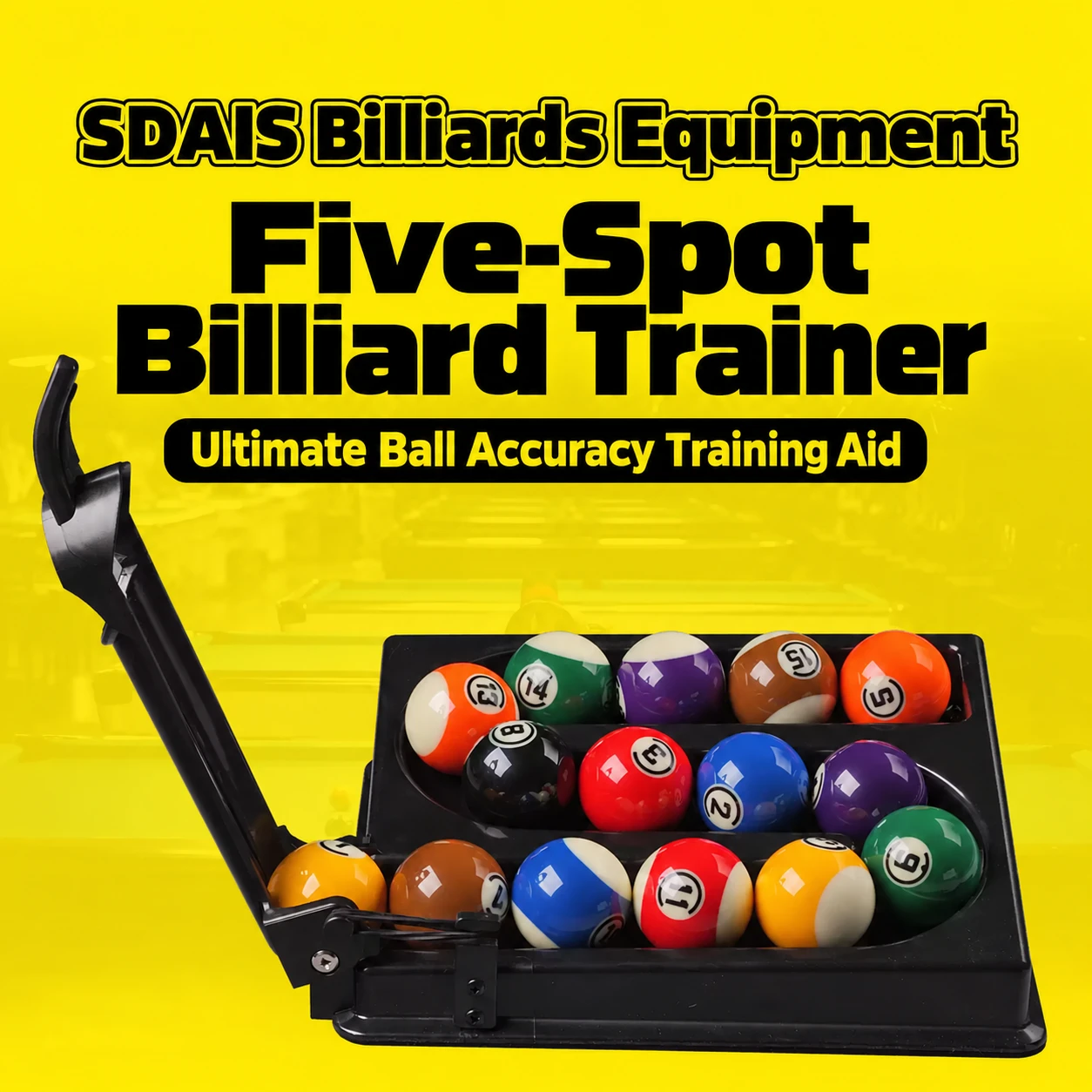
A coaching room and a match table can need different setup tools. The useful question is which task takes time during a session: positioning a practice ball, forming a starting rack, or collecting balls between drills. This guide separates those jobs and gives buyers an acceptance checklist for a five-point setter.
Choose a ball setter when your drill needs the same ball position repeatedly. Choose a triangle rack when you need a full starting rack. Before buying either, verify the ball size, intended game and included components.
Start with the job the tool must do
For repeated positional practice, describe the exact layout to the supplier: one object ball at a reference point, several balls in a sequence, or another drill chosen by the coach. Ask the supplier to show that setup using the offered model. The phrase “five-point” alone does not explain the mechanism or demonstrate compatibility.
A triangle rack groups balls for the start of a game. It does not automatically solve repeat placement for a coaching drill. A ball storage tray organizes a set between sessions. Buying a tray, rack and setter as if they were substitutes can leave the actual practice task unresolved.
Compare the tools by task
| Tool | Buyer task | Check before purchase |
|---|---|---|
| Five-point setter | Repeat a practice setup | Operation video, supported diameter and contact points |
| Triangle rack | Prepare a starting rack | Game format, ball size and rack fit |
| Storage tray | Count and store a set | Ball count, compartment size and storage space |
Use a small sample acceptance check
- Identify the ball set by actual diameter and game format, rather than only “pool balls.”
- Request a video showing loading, placement and removal on a matching playing surface.
- Have the coach repeat one agreed setup and record whether the placement is suitable for that drill.
- Inspect contact edges and the tool underside before use on the table. Follow the supplier’s operating instructions.
- Record any parts that need adjustment, cleaning or replacement, and ask how those parts are ordered.
This is a buyer acceptance process, not a claim that the tool has passed a formal accuracy or tournament test. If the practice result is inconsistent, resolve it with the supplier before ordering multiple units.
Separate the photograph from the supplied set
The current supplier photograph shows the setter with billiard balls. That does not establish whether the balls are included. Ask for an itemized list naming the tool, any attachments, instructions and any ball set. Request the sales unit and package count in the same quotation.
The linked supplier listing showed a three-piece minimum order and a single-package description of 38 × 30 × 15 cm / 1.5 kg when checked on October 26, 2026. These are listing references, not a freight commitment. Confirm the final packed order, destination and shipment method with the supplier.
A useful inquiry brief
Send: “We need a practice setup tool for [game] using [ball diameter]. Our coach wants to repeat [drill]. Please show this operation, confirm whether balls are included, and quote [quantity] with an itemized pack list and shipping to [destination].” This gives the supplier a testable requirement instead of a broad request for a training accessory.
Frequently asked questions
Does a setter replace a triangle rack?
Only if the supplier demonstrates the specific racking task you need. Treat practice placement and full-rack preparation as separate requirements.
Are balls included with the pictured setter?
That is not verified. Confirm the included set in the quotation.
Can the setter be used in competitions?
No competition approval is established by the supplier listing. Follow the rules of the specific event.
Products mentioned in this guide
Product sources
References used for the product discussion. Listing terms can change; availability and final specifications require a quotation.